
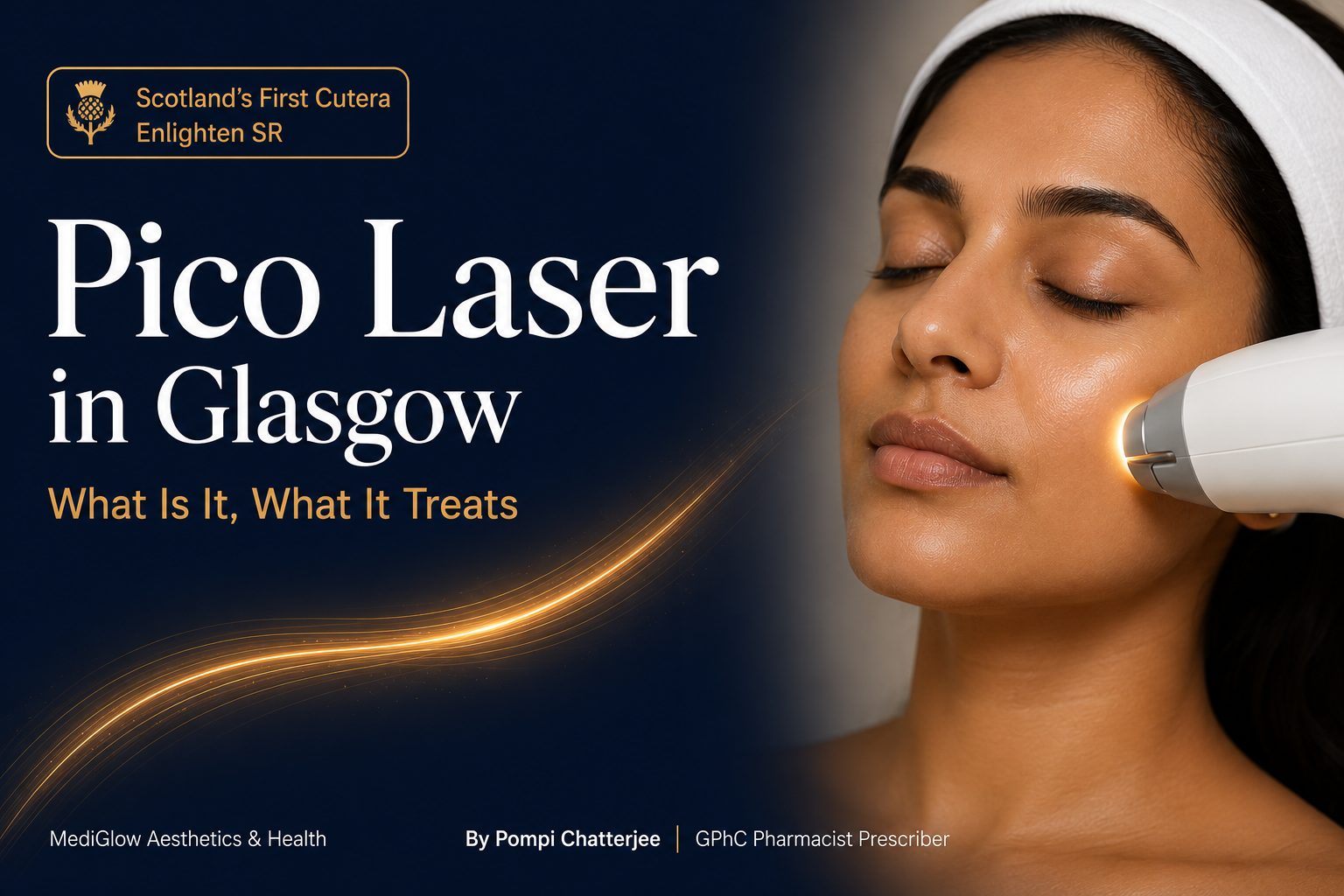
Written by Pompi Chatterjee, GPhC Registered Pharmacist and Independent Prescriber
If you have been researching laser treatment for pigmentation, melasma, sun damage or tattoo removal in Glasgow, you have likely come across the term pico laser. It appears across clinic websites, dermatology articles and patient forums. But what is it, what can it realistically do, and why does the specific device behind the treatment matter?
At MediGlow Aesthetics and Health in Thornliebank, we are Scotland’s first and only clinic to offer the Cutera Enlighten SR – confirmed directly by Cutera when they named MediGlow as a new provider in 2026. This article covers what pico laser is, which conditions it treats, why the Enlighten SR specifically suits our patient profile, and what you can realistically expect from treatment.
| Scotland’s first – independently confirmed
MediGlow’s status as Scotland’s first Cutera Enlighten SR provider was confirmed publicly by Cutera, the device manufacturer. There is currently no other clinic in Scotland offering treatment on this specific platform. |
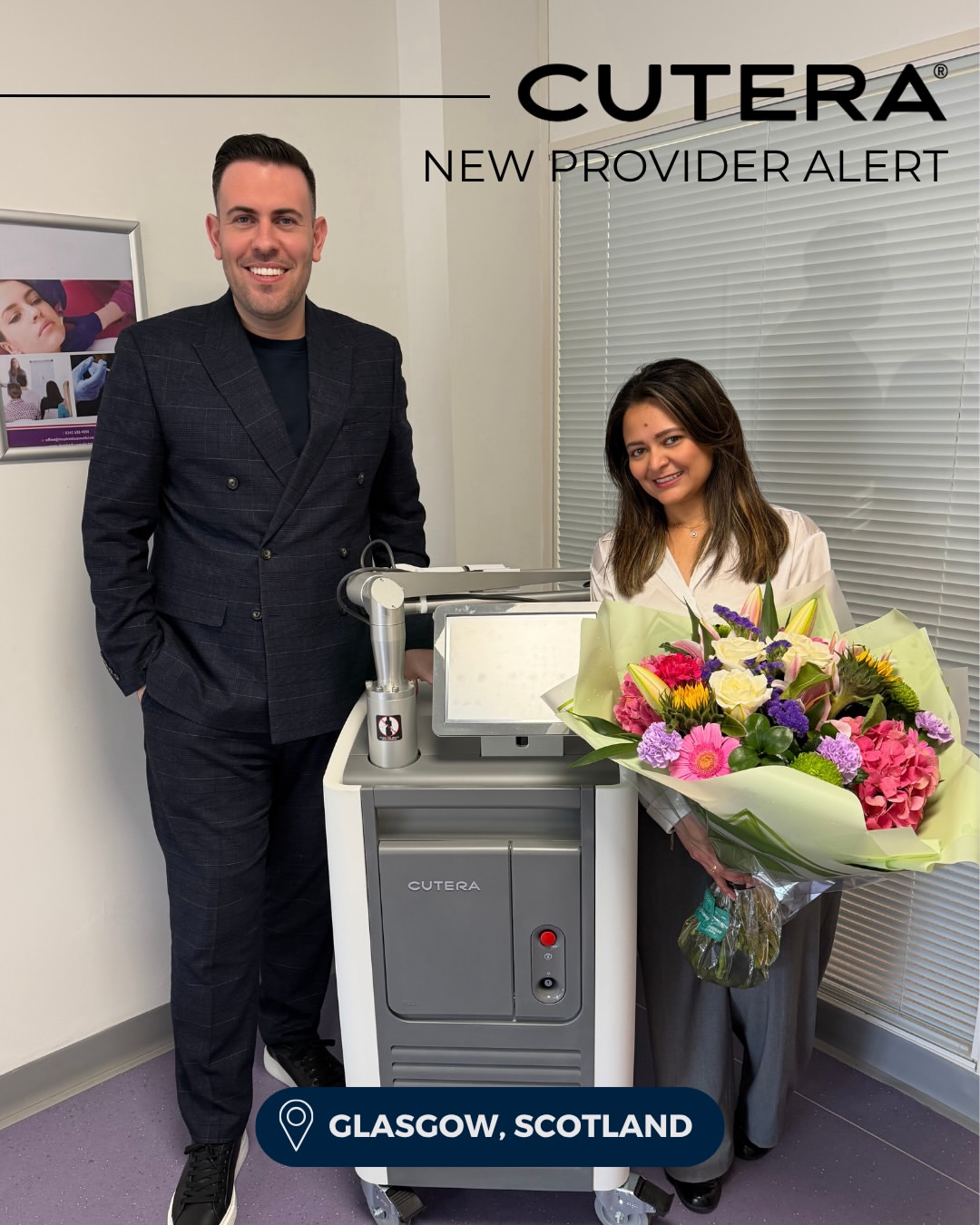
MediGlow’s status as Scotland’s first Cutera Enlighten SR provider was confirmed publicly by Cutera, the device manufacturer
What Is Pico Laser?
The name pico laser refers to picoseconds – a trillionth of a second. That is how fast the Cutera Enlighten SR fires each pulse of laser energy into the skin: at 750 picoseconds per pulse.
Why does that speed matter? Because the mechanism of action is completely different from older laser technology.
Traditional Q-switched lasers work through photothermal energy – heat. They heat pigment until it breaks down thermally. The problem is that heat spreads to surrounding tissue, which increases the risk of post-inflammatory hyperpigmentation (PIH). That risk is higher in patients with South Asian, East Asian or Afro-Caribbean skin tones.
Pico laser works through a photoacoustic effect. The 750ps ultra-short pulses create a pressure shockwave inside the skin rather than heat. That shockwave shatters pigment particles into fragments fine enough for the body to clear naturally through the lymphatic system. Less heat, less surrounding tissue damage, less downtime — and significantly lower PIH risk across all skin tones.
What Conditions Does Pico Laser Treat?
The Cutera Enlighten SR at MediGlow is used for six distinct treatment categories.
Tattoo Removal
The Enlighten SR delivers 750ps pulses at both 532nm and 1064nm wavelengths to break down tattoo ink at different depths and across a range of colours. Black, blue, green, red and yellow inks all respond to the dual-wavelength combination. Most patients see significant fading across a course of up to 6 sessions, with more sessions needed for complex multicolour or professionally applied tattoos.
If you want to know more :- Tattoo Removal Glasgow
Pigmentation – Sun Spots, Age Spots and Freckles
Benign pigmented lesions respond well to picosecond laser treatment. The photoacoustic shockwave breaks down concentrated melanin clusters, which the immune system clears gradually over 4 to 6 weeks after each session. Most patients see visible improvement within 3 to 5 sessions.
Melasma
Melasma is one of the most complex pigmentation conditions to treat because heat can worsen it. The Enlighten SR’s non-thermal photoacoustic mechanism makes it one of the safer laser options for melasma management, particularly when combined with prescription-grade topicals and strict sun protection. At MediGlow, as pharmacist independent prescribers, we build a combined protocol around each patient’s skin rather than relying on laser treatment in isolation.
If you want to know more :- Pigmentation Treatment Glasgow
Post-Acne Dark Marks
Post-inflammatory hyperpigmentation – the dark marks left after acne breakouts – responds well to pico laser. The 750ps photoacoustic pulses target excess melanin without introducing additional thermal trauma to already-sensitised skin. This is especially important in patients prone to PIH, where heat-based laser treatment can make the situation worse.
Acne Scars – PICO Genesis FX
Using the Micro Lens Array (MLA) handpiece, the Enlighten SR delivers fractional 750ps energy to create microscopic zones of controlled disruption in the dermis. These trigger new collagen and elastin production – the PICO Genesis FX protocol. Suitable for rolling and boxcar scars on all Fitzpatrick skin types. Most patients need 3 to 5 sessions, spaced 4 to 6 weeks apart.
If you want to know more :- Microneedling with PDRN (for deeper scarring)
Skin Revitalisation – PICO Genesis
The PICO Genesis protocol uses the Enlighten SR’s dual-wavelength delivery across both 532nm and 1064nm to selectively shatter superficial pigment and induce dermal remodelling for overall skin clarity, radiance and tone. Most patients achieve meaningful improvement in 3 to 5 sessions – significantly fewer than conventional laser toning, which often requires 10 to 15 sessions.
Why the Cutera Enlighten SR Specifically?
Not all pico lasers are equal. The market includes a number of platforms – PicoSure, PicoWay, PicoPlus and others – each with different wavelengths, pulse durations and clinical applications.
The Cutera Enlighten SR offers:
- 750ps picosecond pulse duration – ultra-short pulses across both 532nm and 1064nm wavelengths
- Dual wavelengths (532nm and 1064nm) in a single treatment session, targeting superficial and deep pigment simultaneously
- MLA handpiece for fractional acne scar treatment on all skin types
- PICO Genesis and PICO Genesis FX treatment protocols – structured clinical pathways, not ad-hoc parameter selection
- FDA clearance for treatment across Fitzpatrick skin types I to VI
Being Scotland’s first Enlighten SR clinic means patients across Glasgow, Newton Mearns, Giffnock, East Kilbride, Clarkston and the wider Southside now have access to this platform without travelling to England. That status was not self-assigned – it was confirmed publicly by Cutera when they announced MediGlow as a new provider.
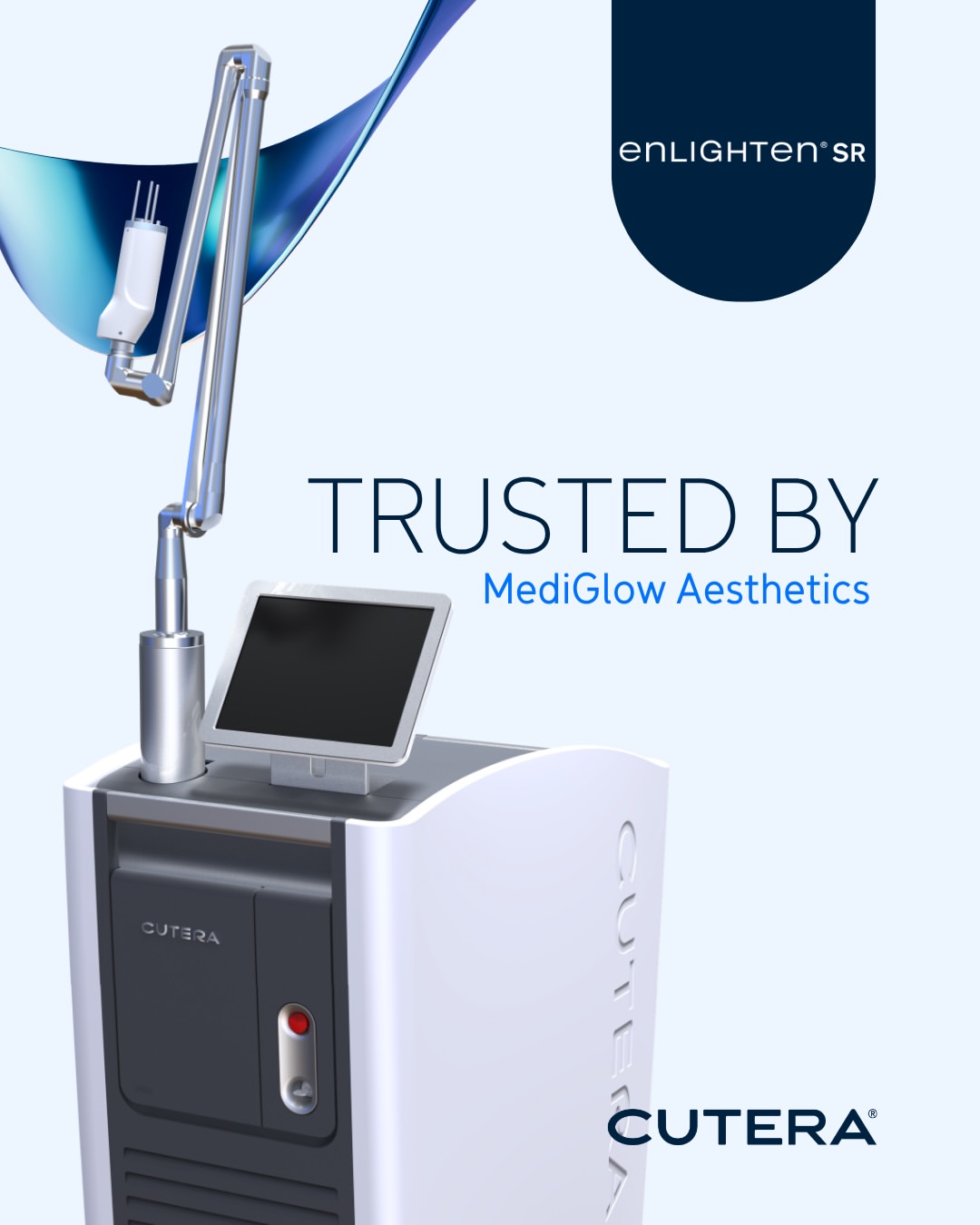
| Clinical note from Pompi Chatterjee, GPhC Registered Pharmacist
“The reason we chose the Cutera Enlighten SR comes down to two things: its safety profile across all skin types and the clinical versatility of the PICO Genesis protocols. A significant proportion of our patients have South Asian or East Asian skin – Fitzpatrick IV and V – and for those patients, laser system choice is not an interchangeable decision. The Enlighten SR’s 750ps picosecond pulses at 1064nm give us the precision and safety margin we need to treat this patient group effectively.” |
Is Pico Laser Safe for South Asian and Darker Skin?
Yes – and this is one of the most important questions we are asked at MediGlow, particularly from patients in Newton Mearns, Giffnock and across Glasgow’s Southside.
Many laser systems carry a higher risk of post-inflammatory hyperpigmentation in Fitzpatrick IV to VI skin. Heat-based treatments stimulate melanin production. In higher-melanin skin, that response is stronger – and a treatment that clears pigmentation in Fitzpatrick II skin can make it significantly worse in Fitzpatrick V skin if the wrong device or parameters are used.
The Cutera Enlighten SR at 1064nm is FDA-cleared for Fitzpatrick I through VI. The photoacoustic mechanism — 750ps pulses creating pressure rather than heat — substantially reduces PIH risk in patients with higher melanin density. MediGlow treats a significant number of patients from Glasgow’s South Asian community and chose this device with that patient group specifically in mind.
If you have been told your skin tone is not suitable for laser treatment elsewhere, this is worth reviewing. Read our guide to laser safety for South Asian and darker skin tones before assuming that applies to pico laser specifically.
What to Expect – From Consultation to Results
Consultation and skin analysis first
No Enlighten SR treatment at MediGlow begins without a full clinical consultation — medical and medication history, Fitzpatrick skin typing, and advanced skin analysis using our MC10 multi-spectral imager, which identifies sub-surface pigment not visible during standard assessment. A consultation and patch test (£40) is required before any treatment.
The treatment session
Sessions typically take 20 to 45 minutes depending on the area and protocol. Topical numbing cream is applied 45 minutes before the laser begins. Most patients describe the sensation as sharp snapping pulses – similar to a rubber band against the skin. Frosting (a temporary white effect on treated skin) is a normal response to pico laser tattoo removal and resolves within 30 minutes.
Downtime and aftercare
Downtime is minimal for most pico laser treatments. PICO Genesis and pigmentation sessions typically produce mild redness for 2 to 4 hours. Tattoo removal sessions may cause localised redness and swelling for 24 to 48 hours. Strict sun protection — SPF 50 with iron oxide – is essential throughout the full treatment course.
Results timeline
Pigmentation results are progressive. Most patients see improvement from approximately 2 weeks after the first session as the immune system clears fragmented melanin. Skin revitalisation results with PICO Genesis often show improved clarity and radiance after the first session, with optimal results after the full course. PICO Genesis FX collagen remodelling continues for up to 3 months after each session.
Frequently Asked Questions
How many pico laser sessions will I need?
This depends on your concern. Skin revitalisation with PICO Genesis typically needs 3 to 5 sessions. Sun spots and isolated pigmentation improve in 3 to 5 sessions, spaced 4 weeks apart. Acne scar treatment with PICO Genesis FX usually requires 3 to 5 sessions at 4 to 6-week intervals. Tattoo removal is more variable – most professional tattoos need up to 6 sessions, with more sessions needed for complex multicolour or densely applied ink. Your personalised plan is confirmed at consultation after a full skin assessment and Fitzpatrick typing.
Is pico laser safe for South Asian, East Asian and Afro-Caribbean skin?
Yes, with the right device and clinical parameters. The Cutera Enlighten SR at 1064nm is FDA-cleared for Fitzpatrick skin types I to VI. The 750ps photoacoustic mechanism works through pressure rather than heat, significantly reducing the post-inflammatory hyperpigmentation risk that heat-based lasers carry in higher-melanin skin. MediGlow has specific clinical experience treating patients with Fitzpatrick IV to VI skin and selects treatment parameters accordingly. All patients require a consultation and patch test before any treatment.
How does pico laser compare to IPL for pigmentation?
For isolated benign pigmented lesions such as sun spots and freckles, pico laser is generally more precise and requires fewer sessions than IPL. IPL works well for diffuse sun damage across a large area and may be a more appropriate first step in some presentations. At MediGlow we have both technologies available. We recommend the approach that best matches your specific skin concern and Fitzpatrick type at consultation – not the most expensive option.
Is pico laser better than Q-switched laser for tattoo removal?
In most cases, yes — for both speed of clearance and safety across skin types. Q-switched nanosecond lasers rely on thermal energy and are effective for dark inks but have limitations with multicolour tattoos and higher PIH risk in darker skin. The Enlighten SR’s 750ps picosecond pulses fragment ink more efficiently, typically achieving faster fading and requiring fewer sessions. The 1064nm wavelength is safe for all Fitzpatrick skin types.
Does pico laser hurt?
Most patients describe the sensation as sharp snapping pulses — comparable to a rubber band against the skin. It is not painless but is manageable for the vast majority of patients. At MediGlow, topical numbing cream is applied 45 minutes before every session. Patients with a lower pain threshold or larger treatment areas can discuss additional comfort measures at consultation.
Can pico laser treat melasma permanently?
Melasma is a complex, often hormonally-driven condition. Pico laser treatment can achieve significant improvement and in some cases near-complete clearance, but it does not address the underlying hormonal or lifestyle triggers that cause melasma. Maintenance treatment, strict daily sun protection with iron oxide SPF, and appropriate topical skincare are essential parts of any melasma management plan. At MediGlow, as pharmacist independent prescribers, we combine pico laser sessions with prescription topicals where clinically appropriate. We are transparent with every patient about what is and is not achievable.
Where is MediGlow and how do I get there from Newton Mearns, Giffnock or East Kilbride?
MediGlow Aesthetics and Health is based at The Glen Clinic, 1 Spiersbridge Way, Thornliebank, Glasgow G46 8NG. We are approximately 5 minutes from Giffnock, 10 minutes from Newton Mearns, 7 minutes from Clarkston, 15 minutes from East Kilbride, and 20 minutes from Glasgow city centre. Parking is available at the clinic. As Scotland’s first and only Cutera Enlighten SR provider, patients travel to us from across central Scotland specifically for this treatment.
Book a Pico Laser Consultation in Glasgow
If you have pigmentation, melasma, acne scars, sun damage or a tattoo you want treated, the first step is a clinical consultation at MediGlow. A GPhC-registered pharmacist independent prescriber will assess your skin type, review your medical history and confirm whether pico laser is the right approach for your specific concern.
Consultations are thorough, honest and without obligation. We will tell you if a different treatment is more suitable. See our full pico laser treatments and pricing or book directly below.
MediGlow Aesthetics and Health is based in Thornliebank, Glasgow, serving patients from Newton Mearns, Giffnock, East Kilbride, Barrhead, Clarkston and Southside Glasgow.
About the Author
Pompi Chatterjee – GPhC Registered Pharmacist & Clinical Lead, MediGlow Aesthetics & Health, Glasgow
Pompi is a GPhC registered pharmacist with specialist expertise in clinical aesthetics and laser treatments for all skin types. She has particular clinical focus on safe and effective treatment of patients with Fitzpatrick IV–VI skin tones — South Asian, East Asian and Afro-Caribbean patients – and is one of Scotland’s first practitioners to offer treatment on the Cutera Enlighten SR. Pompi holds prescribing qualifications and conducts all medical assessments at MediGlow prior to laser treatment.