

Hair Loss Treatment
in Glasgow
Non-surgical scalp treatment for hair thinning and hair loss at The Glen Clinic, Thornliebank. Every treatment plan starts with a clinical assessment of the cause, led by GPhC pharmacist independent prescribers — not a sales consultation.
At a glance
What we treat and how
| Condition | Treatment | Typical course |
|---|---|---|
| Female pattern hair loss (androgenetic alopecia) | SkinPen PDRN Scalp Microneedling | 4 to 6 sessions, 4 weeks apart |
| Traction alopecia | Scalp microneedling and polynucleotide injections | 6 sessions |
| Telogen effluvium (postpartum, stress, illness) | PDRN scalp microneedling | 4 sessions |
| PCOS-related hair thinning | Clinical assessment and individual scalp treatment plan | Individual — assessed at consultation |
| Diffuse hair thinning (no defined pattern) | Polynucleotide scalp injections | 4 to 6 sessions |
Not sure which applies to you? A clinical consultation with Pompi or Lalit identifies the cause before any treatment is agreed. Book consultation
Clinical treatments
Two non-surgical approaches. No blood draw required.
Treatment 01
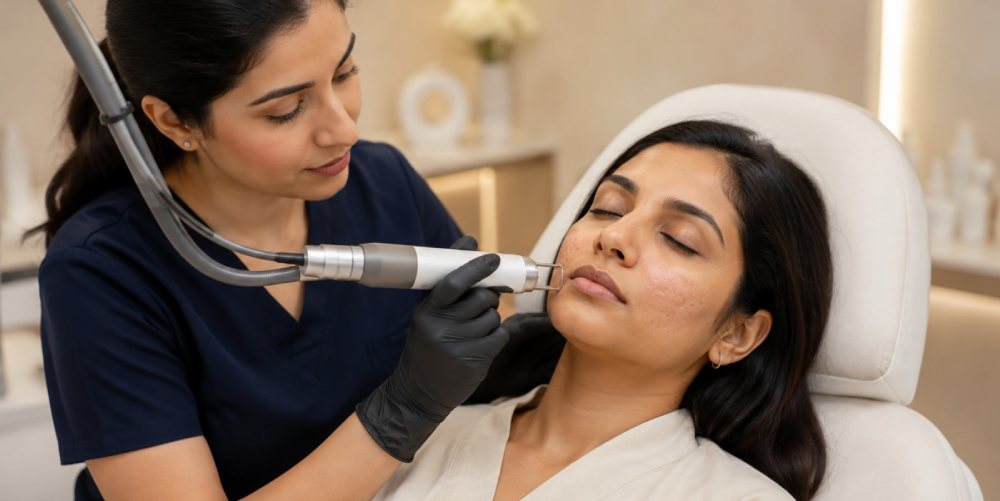
SkinPen PDRN Scalp Microneedling
The SkinPen Elite creates precise micro-channels across the scalp, allowing PDRN (polydeoxyribonucleotide) to reach the dermal papilla directly — the cells at the base of each follicle that control whether hair grows or rests. PDRN activates adenosine A2A receptors, promoting follicle repair and return to the active growth phase.
Combining PDRN delivery with scalp microneedling channels produces greater improvements in hair density than injection alone, attributed to deeper active compound penetration.
Treatment 02
Polynucleotide Scalp Injections
Polynucleotides (PN) are the longer-chain equivalent of PDRN. Injected directly into the scalp at follicle level, they support angiogenesis (new blood vessel formation), reduce scalp inflammation and help follicles transition from the resting phase back into active growth.
MediGlow uses Nucleofill at The Glen Clinic. Polynucleotide injections can be used as a standalone treatment or combined with scalp microneedling as part of a planned course.
Hair loss types
Hair loss conditions treated at MediGlow
The right treatment depends on the type of hair loss. Pompi or Lalit identifies the cause at consultation before any treatment plan is agreed.
Female Pattern Hair Loss
Gradual thinning from the crown or parting line. Driven by sensitivity to androgens — hormonal hair loss that does not resolve without clinical intervention.
Androgenetic alopeciaTraction Alopecia
Hair loss caused by repeated tension on follicles from tight braiding, buns and ponytails worn consistently over time. Common in South Asian patients and frequently under-treated because it is seen as a lifestyle consequence rather than a clinical condition. Early treatment significantly improves outcome.
Common in South Asian patientsTelogen Effluvium
Diffuse shedding triggered by postpartum hormonal shift, illness, surgery or prolonged stress. Follicles enter the resting phase simultaneously rather than in the normal staggered cycle. Usually reversible with the correct treatment protocol.
Postpartum and stress-relatedPCOS-Related Hair Thinning
Androgenic alopecia in women with polycystic ovary syndrome. Elevated androgens and insulin resistance drive follicle miniaturisation. MediGlow can address both the hormonal hair loss and PCOS-related hirsutism (laser hair removal) in the same clinical setting.
Hormonal androgenic alopeciaDiffuse Hair Thinning
General volume loss without a defined pattern. Can be driven by nutritional deficiency, thyroid dysfunction, medication or age-related follicle decline. Identifying the cause at consultation shapes the treatment approach.
General volume lossMediGlow does not offer surgical hair transplant or PRP treatment. If your assessment indicates a cause that requires a different approach, you will be referred to an appropriate specialist.
Clinical standard
Why prescriber-led matters for hair loss
Hair loss has medical causes. PCOS, thyroid dysfunction, iron deficiency anaemia, certain medications and autoimmune conditions can all present as hair thinning. Treating the scalp without identifying the cause produces temporary results at best.
As GPhC pharmacist independent prescribers, Pompi and Lalit take a full clinical history before recommending any treatment — including current medications, relevant blood markers and hormonal history. If there is an underlying medical cause, that is addressed before any scalp treatment begins.
Full medical history review
Current medications, hormonal status and relevant blood markers are assessed before any treatment plan is proposed.
Cause identified first
Medical causes of hair loss are ruled out or addressed before scalp treatment begins. Treating the surface without the cause produces temporary results.
Individual treatment plan
No standard protocols. The treatment course is built around your specific hair loss type, density, scalp condition and overall health.
Same prescriber every session
Pompi or Lalit assesses progress at every visit. The plan is adjusted based on what your scalp is doing — not a fixed protocol.
Your treatment journey
What to expect at MediGlow
Clinical Consultation
Full medical history, medication review and scalp assessment. The cause is identified before any treatment is recommended.
Treatment Plan
A course built around your hair loss type — the number of sessions, interval and whether PDRN microneedling or polynucleotide injections are more appropriate for you.
Treatment Sessions
45-minute sessions with topical numbing applied before scalp microneedling. No downtime. Most patients notice improvement in hair thickness from session 3 onward.
Review and Maintenance
Full results visible at 4 to 6 months, reflecting the hair growth cycle. Maintenance sessions every 3 to 4 months after the initial course are recommended.
Investment
Pricing and sessions
A standard course is 4 to 6 sessions spaced 4 weeks apart, reflecting the biology of the hair growth cycle. Maintenance sessions every 3 to 4 months after the initial course are recommended for sustained results.
SkinPen PDRN Scalp Microneedling
SkinPen collagen induction combined with PDRN delivery to follicle level. Topical numbing included. No downtime.
Nucleofill Scalp Polynucleotide Injections
Nucleofill polynucleotide injections directly into the scalp at follicle level. Mild sensitivity for 24 to 48 hours.
Course of 3 — SkinPen PDRN
Patient reviews
What patients say about MediGlow
"I completely trust the advice and care delivered by Pompi and Lalit. My treatment plan is highly personal and amended to meet my needs and concerns."
"Pompi and Lalit create a judgment-free atmosphere where you can discuss any concerns with your skin. They focus on practical results and genuine advice instead of upselling products."
"They took the time to explain the science and the process so I could fully appreciate the benefits. I feel supported and safe in the hands of experienced professionals."
Your questions
Frequently asked questions
Questions not covered here are answered at your consultation. Pompi and Lalit give honest answers about expected outcomes — including when a different approach would suit you better.
Published RCT evidence for PDRN is predominantly from female pattern hair loss trials. PDRN is used for male pattern hair loss in clinical practice and results are positive, but the published evidence base is currently stronger for women. Pompi or Lalit will assess your specific pattern at consultation and give an honest view on expected outcomes for your individual case.
PRP uses your own platelets drawn from a blood sample. Growth factor concentration varies between patients and sessions. PDRN is a consistent pharmaceutical-grade extract requiring no blood draw. Published comparisons show comparable efficacy between PDRN monotherapy and PRP for hair density improvement, with PDRN showing a better tolerability profile in direct comparison studies. MediGlow does not offer PRP treatment.
The standard induction course is 4 to 6 sessions at 4-week intervals. This reflects the biology of the hair follicle cycle, which operates on a 3 to 6 month basis. Fewer sessions rarely produce lasting results. Most patients notice improvement in hair thickness from session 3 onward. Maintenance sessions every 3 to 4 months after the initial course are recommended for sustained results.
Scalp microneedling produces a mild scratching sensation. Topical numbing cream is applied before treatment. Polynucleotide injections involve brief injection discomfort. Most patients rate both at 2 to 3 out of 10 on a pain scale. Numbing is applied as standard — you do not need to request it.
Yes. Patients treating PCOS-related hirsutism with laser hair removal, for example, may also be suitable for PDRN scalp treatment for the same condition's hair thinning presentation. MediGlow is one of the few clinics in Glasgow able to address both presentations of PCOS in the same clinical setting. Pompi or Lalit will identify whether a combined approach is appropriate at your consultation.
References
Lee WS, Jang HJ, Oh YJ. Therapeutic efficacy of autologous platelet-rich plasma and polydeoxyribonucleotide on female pattern hair loss. Int J Dermatol. 2015;54(12):1330-7. PMID: 25524027. doi:10.1111/ijd.12678
Bakshi A, et al. Polydeoxyribonucleotide in Female Pattern Hair Loss: Current Evidence and Knowledge Gaps. J Cosmet Dermatol. 2026. PMC13318850. doi:10.1111/jocd.71028
Akaberi SM, Sharma K, Ahmadi-Ashtiani HR, Hedayati M. Polydeoxyribonucleotide in Skincare and Cosmetics: Mechanisms, Therapeutic Applications, and Advancements Beyond Wound Healing and Anti-aging. J Skin Stem Cell. 2025;12(1):e159728. doi:10.5812/jssc-159728
All references have been verified against PubMed and publisher pages for accuracy of authors, journal, year and DOI.